

“ZipZap covers everything: road tax, maintenance, and insurance.”
Michelle Kang
Project Coordinator
Ask someone in Singapore what their car costs and you'll usually get the monthly loan instalment. It's the number that leaves the bank account, so it's the number people remember. It also pales in comparison to the real killer: car depreciation.
Depreciation is the gap between what you paid for the car and what you get back when you let it go. It leaves your pocket a little at a time, across years, and most owners only fully reckon with it on the day they hand over the keys.
Car depreciation in Singapore is at least predictable. Most of what you get back at the end is set by published formulas rather than by negotiation, so if you know your car's numbers, you can work out what it's costing you per year to within a few dollars.
In most countries, depreciation is a guess about resale value. In Singapore it's mostly arithmetic, because two of the three big numbers are fixed by the Land Transport Authority (LTA).
When you deregister a car, LTA refunds you two things: the PARF rebate, which is a slice of the Additional Registration Fee (ARF) you paid when the car was first registered, and the COE rebate, which is the unused portion of the Certificate of Entitlement premium.
Add those together and you get your car's paper value, which represents its worth to LTA on the day you deregister it. Depreciation is then the difference between what you paid and what you get back, spread across the years you owned it.
Enter your car's numbers and you'll see the annual depreciation, the total, and how the paper value drains away across the 10 years of the COE.
You'll need three things off your vehicle log card: the OMV, the COE quota premium you paid, and the date of first registration.
Every rate below is per LTA as at August 2026.
- Step 1: What you actually paid for
Your purchase price isn't really the price of a car. It's the price of a car plus a stack of taxes plus a 10-year licence to use it:
Purchase price = OMV + excise duty + GST + ARF + COE premium + registration fee + VES surcharge (if any) + dealer margin
OMV, or Open Market Value, is what Singapore Customs assesses the car to be worth on import. It covers the purchase price, freight, insurance, and handling, and excludes local duties and taxes. Excise duty is 20% of OMV. GST is 9%, charged on OMV plus excise duty. The registration fee is a flat S$350 for cars. The COE premium is whatever the quota premium came in at when your car's COE was bid for, and the dealer margin is the negotiable bit.
Of everything in that stack, only the ARF ever (partly) comes back to you.
- Step 2: How your ARF is worked out
ARF is a tax on your car's OMV, charged in marginal slices like income tax. For cars registered with COEs from the second bidding exercise of February 2023 onwards, the tiers are:
ARF = sum of each slice of OMV multiplied by that slice's rate
Take a car with an OMV of S$25,000. The first S$20,000 is taxed at 100%, giving S$20,000. The remaining S$5,000 falls into the 140% band, giving S$7,000.
ARF = S$20,000 + S$7,000 = S$27,000
A car with an OMV of exactly S$20,000 pays S$20,000 in ARF, so ARF equals OMV. Plenty of mass-market cars sit right around that line.
- Step 3: Emissions rebates change your ARF
The Vehicular Emissions Scheme (VES) puts your car in a band based on its emissions. Cleaner bands earn a rebate; dirtier bands pay a surcharge.
Take note: a VES rebate works by reducing the ARF you pay. A VES surcharge does not increase your ARF and is charged as a separate cost at registration instead.
Net ARF = gross ARF − VES rebate − EV Early Adoption Incentive (if any)
Because your PARF rebate is later calculated from the ARF you actually paid, a rebate today means a smaller rebate at the end. Buyers of clean cars pay less upfront and get less back. Buyers of dirtier cars pay a surcharge that never comes back at all.
Electric cars stack a second rebate on top. The EV Early Adoption Incentive takes a further 45% off ARF, capped at S$7,500 for cars registered in 2026, and it ends entirely on 1 January 2027.
So an electric car with an OMV of S$34,000 has a gross ARF of S$39,600 (S$20,000 at 100%, then S$14,000 at 140%). Band A takes off S$22,500. The EV incentive takes off another S$7,500.
Net ARF = S$39,600 − S$22,500 − S$7,500 = S$9,600
Emissions rebates can't push your ARF below S$5,000, so a cheap car with a low OMV really can owe less than S$5,000. For fully electric cars registered from 1 January 2022 to 31 December 2027, the floor is S$0 instead.
- Step 4: Your PARF rebate
The PARF rebate is a percentage of the ARF you paid, and the percentage falls the longer you keep the car, until the 11th year and beyond, when it’s gone completely.
For cars registered with COEs from the second bidding exercise of February 2026 onwards:
PARF rebate = net ARF paid × age-based percentage, capped at S$30,000
Our S$25,000 OMV car paid S$27,000 in ARF. Deregister it at 5 years:
PARF rebate = S$27,000 × 30% = S$8,100
The cap only bites on expensive cars. At the 30% rate you'd need an ARF above S$100,000 to reach it, which means an OMV of roughly S$65,600 or more.
Older cars follow older schedules, and they keep them for life. A car registered before February 2026 sits on the previous schedule of 75% stepping down to 50%, with a S$60,000 cap. Cars registered before February 2023 have the same percentages with no cap at all. Nothing was clawed back from cars already on the road.
- Step 5: your COE rebate
Your COE is a 10-year licence, and you get back the part you didn't use, pro-rated by the months and days remaining.
COE rebate = quota premium paid × unused months ÷ 120
Our car paid S$124,000 for its COE. Sell at 5 years and 60 of the 120 months are left:
COE rebate = S$124,000 × 60 ÷ 120 = S$62,000
Run the COE to expiry and this figure is zero. There's nothing unused left to refund.
- Step 6: paper value
Paper value = PARF rebate + COE rebate
At 5 years: S$8,100 + S$62,000 = S$70,100
At 10 years: S$1,350 + S$0 = S$1,350
A car that cost close to S$200,000 is worth about a thousand dollars to LTA on the day its COE runs out.
- Step 7: depreciation
Total depreciation = purchase price − paper value
Annual depreciation = total depreciation ÷ years held
Our car cost S$200,000 all-in. Selling at 5 years:
Total = S$200,000 − S$70,100 = S$129,900
Per year = S$129,900 ÷ 5 = S$25,980
Holding it the full 10 years:
Total = S$200,000 − S$1,350 = S$198,650
Per year = S$198,650 ÷ 10 = S$19,865
It’s roughly S$6,000 a year cheaper to keep the car for a decade. That's the arithmetic behind the standard advice to run a car to the end of its COE, and it's why the yearly figure in the calculator drops as you slide toward 10 years. You're spreading the same unavoidable loss across more years of use.
Here are three sets of real-world figures run through the same chain, all assuming 2026 registration and a 5-year hold.
The luxury car gets four times the rebate of the mass-market one, because it paid an enormous ARF to begin with. The EV gets the smallest rebate of the three despite costing about the same as the sedan, because its rebates already did their work upfront.
In the Budget 2026 statement, the PARF rebate schedule was cut and its cap was halved. Every band in the schedule fell by exactly 45 percentage points, from 75% down to 30% at the top, and from 50% down to 5% at the bottom. The cap went from S$60,000 to S$30,000.
LTA's reasoning is that PARF exists to encourage owners to retire older, more polluting cars, and as electric cars become normal, there's less need to pay people to deregister early.
The effect on your own numbers is easy to calculate. Because every band dropped by the same 45 points, the loss is 45% of your ARF, whenever you deregister:
Rebate lost = ARF paid × 45%
For our S$27,000 ARF car, that's S$12,150 less coming back, whether you sell at year 5 or year 10. For the luxury sedan above, with its S$78,499 ARF, the halved cap widens the gap to more than S$35,000.
The cutoff is easy to misread, so it's worth being precise. For cars needing a COE, the new schedule applies based on which COE bidding exercise the car's COE came from, specifically the second exercise of February 2026 onwards, and not the date the car was registered. A car registered in late February 2026 on a COE won in January stays on the old, more generous schedule. The fixed date of 13 February 2026 applies only to cars that don't need a COE, such as taxis.
All of the math above represents the value refunded by LTA, and is not strictly representative of what the car is worth. Sell to a dealer or a private buyer with COE time remaining and you'll usually get more, because they're paying for the years of driving still left in the car. Paper value sets the floor, while condition, mileage, service history, and model popularity will set the ceiling.
The gap moves with the market. When COE premiums climb, used cars with healthy COE balances get more valuable and the gap widens. A tired, high-mileage car can trade close to its paper value, occasionally below.
Treat your calculator result as the worst realistic case if you sell early, and as a solid estimate if you plan to run the COE to expiry. At expiry there's no market value left to argue about.
Depreciation is the biggest cost of car ownership in Singapore, but it's nowhere near all of it. None of the following appear in the calculator.
Road tax is calculated from engine capacity for petrol cars, or from power rating for electric cars, which also pay a flat S$700 a year on top. A 1.6-litre car runs around S$742 a year. Cars past 10 years old pay a surcharge that starts at 10% and reaches 50% from year 15.
Insurance typically runs S$750 to S$1,150 a year for an experienced driver, and considerably more for young or newly licensed ones. Servicing and maintenance average roughly S$278 for every 10,000km at authorised workshops, and electric cars generally cost less. Then there's parking, both season parking where you live and daily rates where you go, plus fuel or charging and ERP.
Financing adds interest. Car loans are capped at 60% of the purchase price for cars with an OMV above S$20,000, or 70% at or below that, with a maximum tenure of 7 years. A car loan also counts towards your Total Debt Servicing Ratio, so it can affect your loan eligibility when you next apply to borrow.
Add it all up and a car that depreciates S$20,000 a year can easily cost S$28,000 to S$30,000 a year to keep on the road.
The formulas above assume the ordinary path. A few situations change the answer completely.
Renewing your COE wipes out your PARF rebate. At the 10-year mark you can pay the Prevailing Quota Premium and keep driving, either 100% of it for another 10 years or 50% for a final 5. It can work out cheaper. But a renewed car has no PARF entitlement ever again, only the COE rebate.
Passing 10 years ends the PARF rebate too. Deregister at 10 years and one day and it's nil. The step down from 5% to nothing is abrupt, so if you're near the line, check the exact date.
Exporting within 2 years caps your COE rebate at 80% of the premium you paid, rather than the full pro-rated amount.
Depreciation is charged for owning a car, not for using one. Two identical cars driven identical distances lose the same value, whether one is on the road daily and the other sits parked all week.
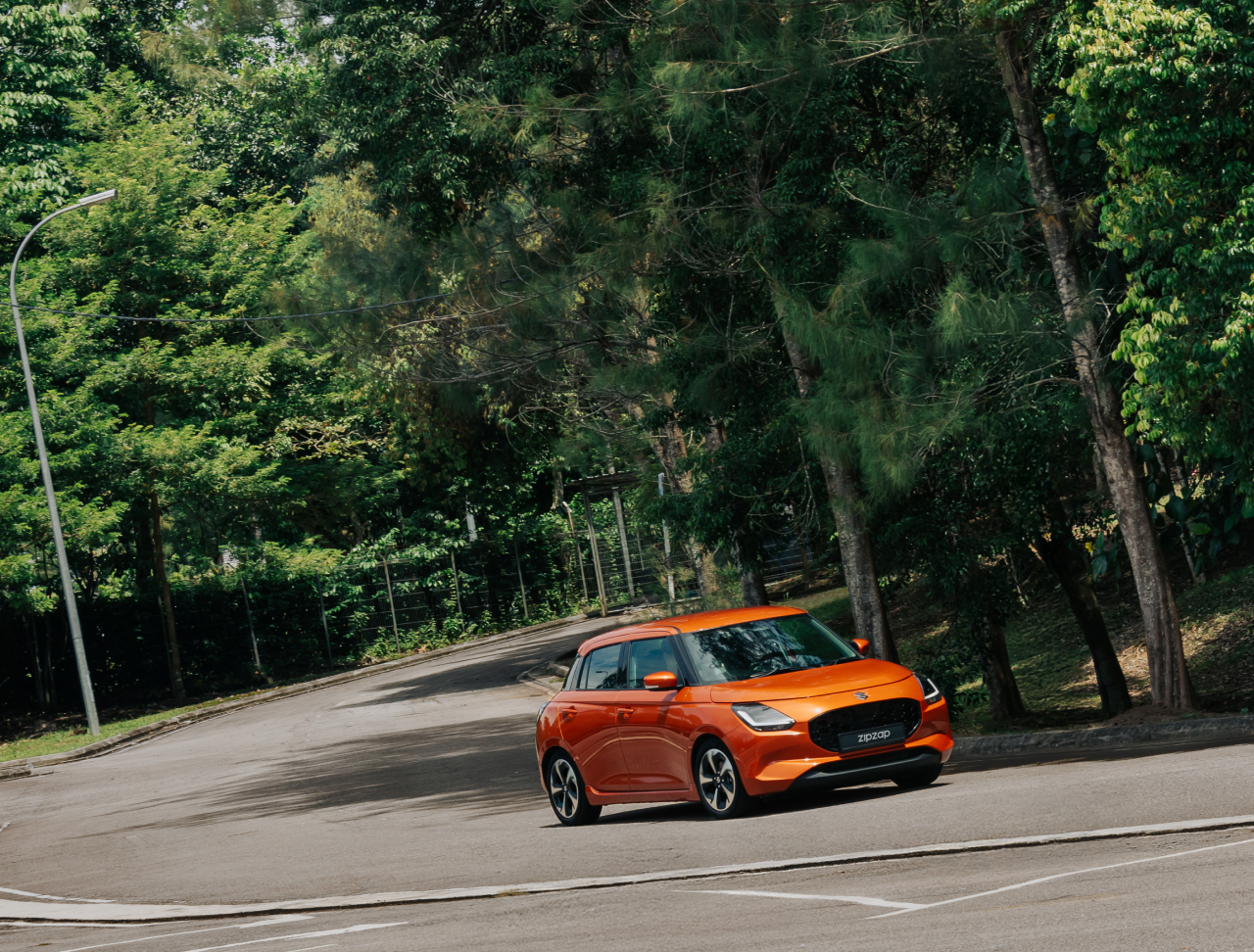
For short term useage, options like carsharing are a great way to get all of the convenience with none of the cost. But for longer-term useage, a car subscription can come in clutch. With ZipZap, the car is yours to use for a fixed monthly fee that already covers road tax, insurance, maintenance, and servicing, on terms from 6 months rather than 10 years. The depreciation on that car isn't yours to carry, and neither is the guesswork about what a buyer might pay for it in five years, or what the PARF schedule might look like by then.
Subscribers can also list their car on GetGo's carsharing platform through Subscribe & Share during the stretches they aren't driving it, so idle weeks pay something back.
Run your own figures through the calculator first, then decide which side of that maths you'd rather be on.
Figures in this article reflect LTA rates as at August 2026 and are estimates for guidance. Check your vehicle log card and LTA for your car's exact numbers.
[[testimonial]]

Michelle Kang
Project Coordinator

Olivia Cai
First-time Mum


