

Shineray X30LEV review: a practical electric van for businesses in Singapore
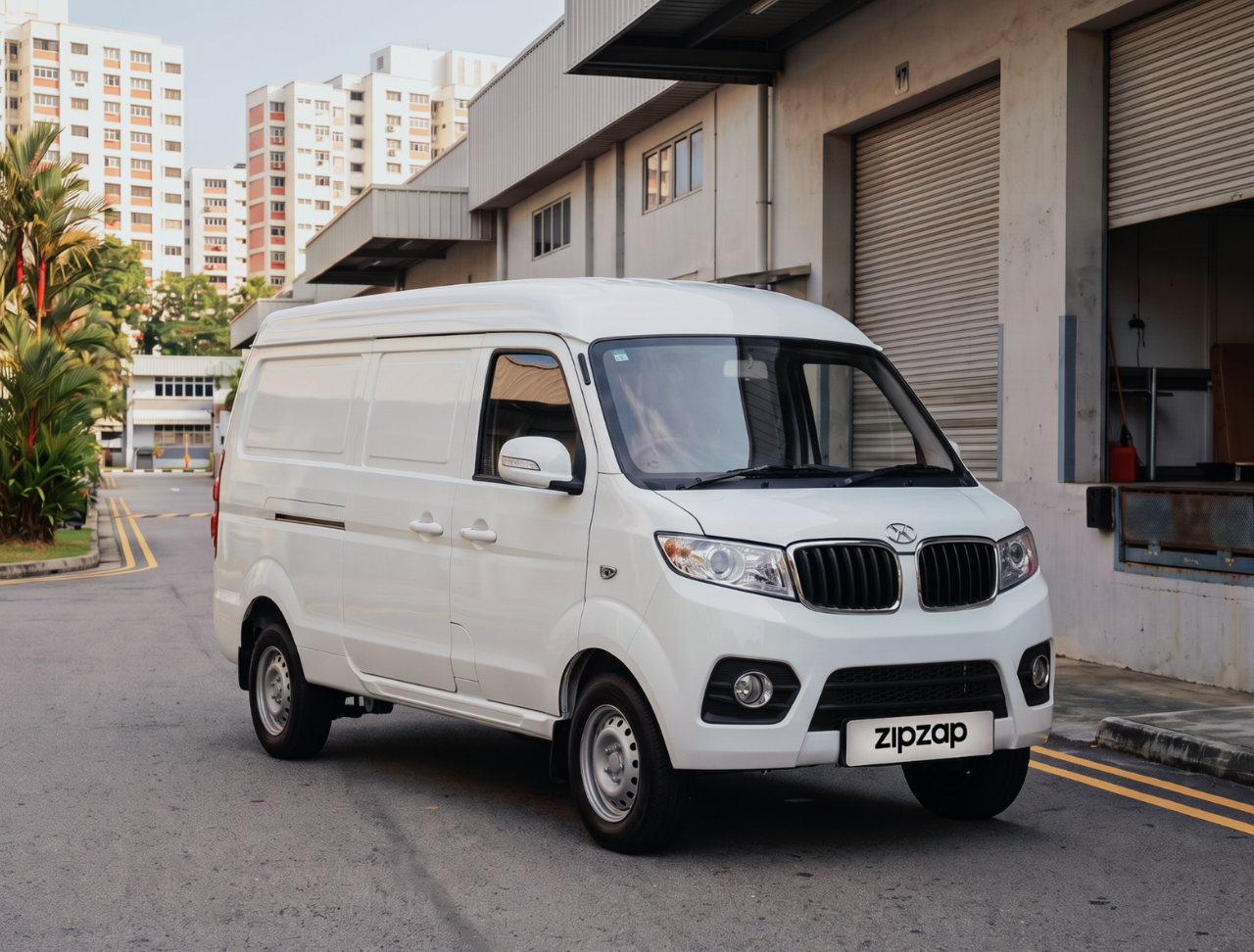
Ask a florist, an aircon contractor, or anyone who means business what they want from a van, and you’ll hear a few recurring things. They want room for stock, something that fits the loading bay at a condo, and a monthly fuel bill that doesn't hurt. The Shineray X30LEV is a compact electric panel van with a surprisingly roomy cargo box, and it just so happens to have all 3, and then some.
Design and cargo space
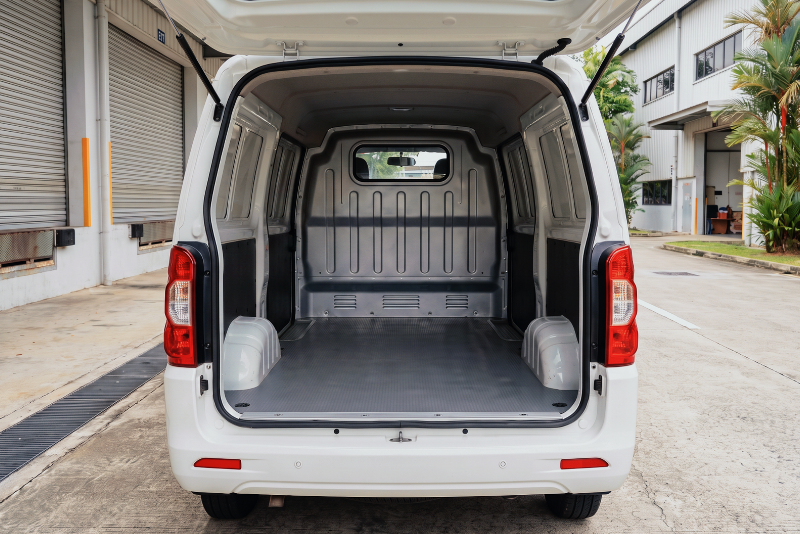
Park the X30LEV next to a regular MPV and it doesn't look much bigger. At just under 4.5m long, it's stubbier than a Toyota Hiace, which lets it slide right into tight HDB loading bays and industrial estate back lanes. But at almost 2m tall with a boxy rear, the X30LEV packs 5.2m³ of cargo space behind the two front seats. And to top it all off, the load floor stretches over 2.5m, so longer items like shelving, aircon trunking, or folded tables can lie flat without angling them through the cabin.
Battery, range, and charging
Power comes from a 41.86kWh LFP battery supplied by CATL. LFP chemistry is common in commercial vehicles because it handles frequent charging well and tends to age gracefully over many cycles, which suits a van that works every day.
The official range is about 250km on the stricter WLTC test, or 300km on the older NEDC cycle. Real-world figures will sit somewhere below that once you add a full load, the aircon on high, and stop-start traffic. Even so, a full charge comfortably provides you with enough juice for most delivery and trade routes throughout Singapore.
Charging times depend:
- DC fast charging: Roughly 40 to 45 minutes to reach 80%
- AC charging: Around 4 to 6 hours for a full charge
Performance
With 60kW and 220Nm going to the rear wheels, the X30LEV won't win any drag races. But if there were competitions for handling multi-storey car park ramps with full cargo, you can bet that this van would be in the running for gold.
On paper, the X30LEV gets about 250km on the WLTC test and 300km on the older, more generous NEDC cycle. Expect less in real driving. A full load and the aircon on high both eat into range, and so does crawling along the PIE at 6pm. Many delivery and trade routes around the island stay well under 150km a day, though, so an overnight charge usually covers a full shift with plenty left over.
On a DC fast charger, it takes roughly 40 to 45 minutes to reach 80%, about the length of a lunch break. A full charge on AC takes around 4 to 6 hours, which makes it more of an overnight job. If your business doesn't have its own charger, there are plenty of public EV charging stations across Singapore now, in HDB car parks, malls, and petrol stations.
Cabin and safety features
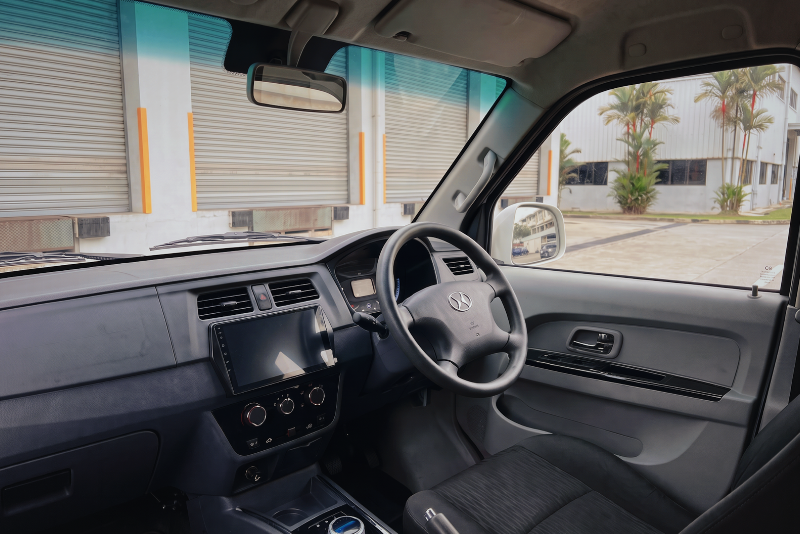
The cabin is plain and practical, with two seats. The current model comes with:
- Dual front airbags
- Anti-lock brakes (ABS) with electronic brakeforce distribution (EBD)
- Hill-start assist
- Reverse camera and rear parking sensors
- Touchscreen with Bluetooth, Apple CarPlay, and Android Auto
Seeing out the back of any panel van is hard, so you'll use the reverse camera and sensors on every drive, especially when backing into a loading dock, where most small scrapes happen.
What it costs to run
The X30LEV uses about 16.1kWh per 100km. Assuming public charging at around $0.60 per kWh, that comes to under $10 for every 100km. A van doing 100km a day over 22 working days incurs roughly $210 a month on electricity, and less if you charge at home or at your depot on a cheaper rate.
Servicing is simpler as well, since there's no engine oil or spark plugs to change and no clutch to wear out. Regenerative braking takes some of the work off the brake pads too.
Buying one outright costs a lot more upfront. Every goods vehicle needs a Category C COE, which closed at $93,101 in the first bidding exercise of September 2026. For electric commercial vehicles, the Commercial Vehicle Emissions Scheme takes $15,000 off for Band A vehicles until 31 March 2027. On top of that, you'll still pay for road tax, insurance, servicing, and the loan.
Who the Shineray X30LEV suits
If your business runs regular routes around the island, the X30LEV makes a lot of sense. It suits:
- E-commerce sellers handling their own deliveries
- Florists, caterers, and bakeries with daily drop-offs
- Aircon, electrical, and renovation contractors carrying tools and parts
- Event and AV crews moving equipment between venues
- Small logistics firms adding capacity without adding diesel vans
A larger van is the better choice if you need a third seat, regularly carry close to a tonne, or drive long distances with little time to stop and charge.
Our verdict on the Shineray X30LEV
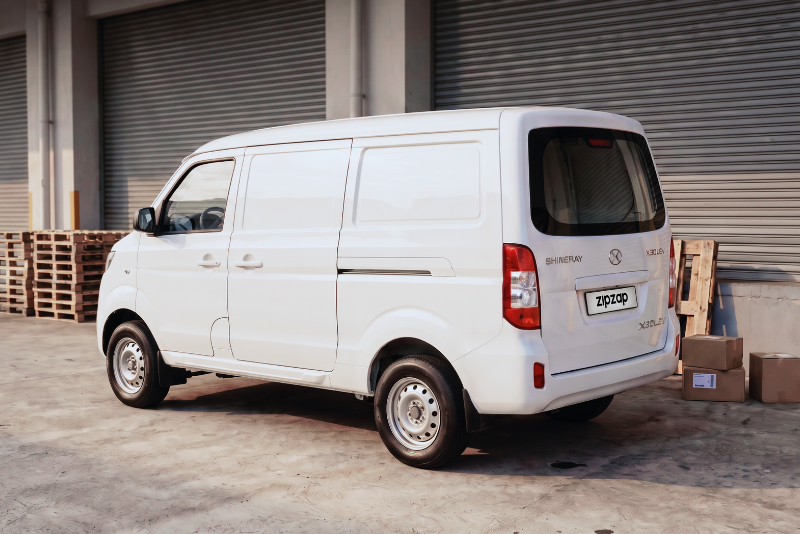
The Shineray X30LEV is a sensible city work van. You get more cargo space than you'd expect from something this size, it's cheap to run, and it's easy to drive and park. Its range comfortably covers a normal working day in Singapore, and a fast charge fits into your lunch break.
Pros
- 5.2m³ of cargo space in a compact footprint
- Low running and servicing costs
- Drivable on a Class 3 licence
- LFP battery built for daily charging
Trade-offs
- Two seats only
- Range drops with heavy loads and aircon use
- Some older basement car parks are too low for its 1.99m height
If you'd like an electric van working for your business without paying for a COE upfront, subscribing is the most flexible way to get one. Let us know what you need out of the Shineray X30LEV on ZipZap, and get a quote for your business.


